Super Jangle 64
 |
More... MORE! MOAR!!! |
 |

| ⠀ | ||||
| ||||
| Developer(s) | EVERYONE! | |||
| Publisher(s) | EVERYONE! | |||
| Distributor(s) | EVERYONE! | |||
| Director(s) | EVERYONE! | |||
| Producer(s) | EVERYONE! | |||
| Artist(s) | EVERYONE! | |||
| Writer(s) | EVERYONE! | |||
| Composer(s) | EVERYONE! | |||
| Platform(s) | ⚠️ To Be Announced ⚠️ | |||
| Genre(s) | EVERYONE! | |||
| Series | EVERYONE! | |||
| Engine | EVERYONE! | |||
| Release Date(s) | The heat death of the universe | |||
| Mode(s) | Single-player Multiplayer | |||
| Age Rating(s) | 
| |||
| Media Included | ⚠️ To Be Announced ⚠️ | |||
| Manual(s) | ⚠️ To Be Announced ⚠️ | |||
| Available Input | ⚠️ To Be Announced ⚠️ | |||
| Storage Needed | 999,999,999,999,999 QB (Quettabytes) | |||
| Cost | est. $999,999,999,999,999 Morbillion | |||

Ey, Jim? Y'know that game Super Jangle 64? Yeah I reckon it's time that we uhhh talk about it. It is the main subject for this article, anywho.
Wha, Dave? You wan' me to explain all of Super Jangle 64 to ya? Alright then, here goes nothin'.
Err Super Jangle 64 is ermmm... it's uhh, it's a game m'kay? It's uhhhh... it's a game and uhhh not a show or uh movie and uhhhh it's unfinished as fuck so y'all can all just scurry off okei? goon, git, git! GIT MOTHERFUCKER I HAVE A SEMI-AUTOMATIC RIFLE AHHHHHHHHHHHHHHHHHHHHHH AHHHHHHHHHH AHHHHHH
Overview and Premise
Untitled, known colloquially by various titles such as Super Jangle 64: Fall of the Millenium King, is the ultimate video game in the entirety of all existences and none-existences; and the sacred unholy scripture of the Dark Prognosticus written by  . It is an upcumming episodic mixed-genre open-world action-adventure role-playing platformer crossover video game developed and published by the ⠀⠀⠀⠀⠀⠀⠀⠀
 Newwenmani Company with the help and aid of every single damn video game company ever to exist (real life and fanon.) Originally conceived and dubbed in the mid 1990s as "Project Noah" as a simple sequel to the SNES game 46 Elgnaj Repus, the project's development spanned several decades; from a profound RPG for the PlayStation 1 and Nintendo 64 with a budget of $882 million, to it eventually developing into a much larger and grander storyline that spans multiple decades of groundbreaking and existential themes of pure beauty and tragedy. As such, it is considered the video game of all time! Written and directed by multilingual authors, philosophers, and schizophrenic domestic terrorists: KMJ, Ozzie2009, and The Loathsome Dung Eater, the game is most notably known for being set to be the final video game EVER made and the single most
 autistic biggest, ambitious, outstanding, and greatest fictional crossover and work of fiction ever conceived by sapient thought, with over ∞ franchises, including all works of fiction, mythology, and all original settings throughout human history, crossing over for one last gigantic overarching multi-narrative of all lifetime. It is also set to be the longest work of art and fiction ever created and written; with the game’s entire script surpassing The Loud House: Revamped in its word count by 999,999,999,999,999,999999,999,999,999,999x (times) and making the laughable puny fanfic look like an amateur. Overall, the story is both a celebration and deconstruction of all fiction + fanfictions.
Taking place in the entire god damn motherfucking Omniverse, the aggregate of all fiction, the setting contains all settings. As such within its first glance, the story itself begins as a typical run of the mill heroic crossover, featuring many of your beloved fictional characters, trying to save all realities from an original nihilistic and evil antagonistic faction led by the elusive Cecil Turtle; similar to the very commonly stagnant and generic good vs evil narratives represented by people such as J. R. R. Tolkien, George Lucas, Tetsuya Nomura, etc. Though, that slowly starts to become ever less true as the narrative continues. The setting in truth, is much more complex, grandiose, cruel, bizarre, and surreal. All multiverses in the end, live in constant conflict. All realities are simply stuck in a state of total conflict with hostile inter-dimensional metaphysical races from the Omniversal void. There are effectively no truly benevolent or malevolent gods or entities in the Omniverse, only multiple sides trying desperately to eradicate one another. In the long run, our heroes cannot hope to defeat their enemies, so in the end, our heroes aren't really fighting for a brighter future but "fight for their right for peace, even if it's only for a little longer." Ultimately, through constant sacrifice and toil, our heroes simply delay the inevitable end of all life. But that's not all! The game doesn't just focus on all heroes; it's a story told through other perspectives. With the narrative’s multi-perspective structure, it ensures that moments of triumph for one side turns into horror when retold from another faction's viewpoint. A “liberation” becomes an invasion and a “preemptive strike” becomes an unforgivable genocide. Characters are written not as embodiments of good or evil, but instead, as just people warped by their own ideological believes, morals, fears, faults, loyalties, and survival instincts, often performing monstrous acts while sincerely believing they are preventing a greater catastrophe. Each faction is the primary antagonist of the other ones simultaneously, creating a narrative feedback loop of escalation where no side can de-escalate. As viewers slowly learn more about the nonsense that happens in the Omniverse, they are forced into the uncomfortable role of narrative judge, having to weigh each character's actions and decisions to decide what side, if any, deserves to be called “right,” fully aware that such a judgment may say more about the audience’s own values than about the characters themselves.
As the game is a melting pot of as much fiction as the participants here on this forsaken wiki can think of, the story itself contains almost all narrative genres imaginable. If you believe that absurdism, action flicks, adventure stories, afrofuturism, apocalyptic tales, black comedies, body horrors, buddy cop stories, comedy-dramas, coming-of-age tales, cosmic horror, courtroom dramas, crime thrillers, cyberpunk, disaster narratives, docudramas, dystopian works, eco-fiction, epics, erotica, espionage, experimental fiction, fairy tales, family sagas, fantasy, feminist fiction, folklore, found-footage, gangster stories, gothic fiction, grief literature, hard science fiction, heists, classical horror, kitchen-sink realism, legal thrillers, mystery stories, medical dramas, melodramas, memoirs, military fiction, mockumentaries, monster movies, musicals, mythic fiction, naturalism, neo-noir, new wave science fiction, opera films, outlaw narratives, political dramas, political thrillers, psychological horrors, psychological thrillers, pulp fiction, prison dramas, queer fiction, quest narratives, road-trip stories, romance, romantic comedies, rural noir, satire, science fantasy, sci-fi, screwball comedies, sea adventures, slapsticks, slashers, space operas, steampunk, superheroes, survival narratives, techno-thrillers, teen dramas, time-travel stories, tragedies, tragicomedies, weird fiction, westerns, xenofiction, young adult fiction, and zombie horror cannot work alongside each other, than this video game will prove you the fuck wrong bitch!
The game is scheduled to be released in 1,000,000,000,000,000,000,000,000,000,000,000,000,000,000,000,000,000,000,000,000,000,000,000,000,000,000 AD (10^78 AD) during the heat death of the universe. Although, many people believe and have sworn that the game had already been released throughout the late 90s up to the 2000s with the game receiving mixed reviews from critics and audiences alike for its shady marketing and development, but engaging and tremendous gameplay, surreal experience, and groundbreaking storyline with the story itself having been the subject of extensive analysis for its existential and profound themes. As well for its literary devices and heavy usage of satirization. Influences said to have been included (but were not limited to) were the Abrahamic religions, Hinduism, Buddhism, Qigong, philology, philosophy, classical mythology, Norse mythology, Gnosticism, Zoroastrianism, Confucianism, Shintō, Taoism, and countless fictional precursors. Similar to Capa Simulator 2015, the game was nominated for a Scammy, but it did not win the award due to lacking any evidence of the game existing outside of widespread anecdotal rumors, and some strange incidents that nobody could connect to the game without knowledge of who played it. Scientists are still convinced that the game was a mass hallucination brought upon by God as punishment for destroying the psyche of Chris Chan and plunging the timeline into darkness.
Gameplay

Untitled is a 3D open world action mixed-genre role-playing video game that is half platformer and half turned based combat with occasional 2D gameplay sections. The game contains the largest open world of all time, exceeding the pitiful size of Grand Theft Auto VI's pathetic world 99x (times). Players complete various objectives in order to progress through the story. In the game, the player controls over 16,000+ including a sad virgin chud who's somehow still better than their canon counterpart. The player can switch between any of the available playable characters at any time, similar to Grand Theft Auto V or Grand Theft Auto VI, with the only exception being when the player is actively engaged in combat and the character they want to switch to is not in the same fight.
In overall combat, a stamina system allows players to "break" enemies, temporarily stunning them for massive amounts of damage. As the story progresses, the game introduces new attacks and parries, including “special attacks,” “special counters,” and “special skills,” all of which deal devastating damage. The use of special attacks is monitored by a gauge shared by each character. It will slowly fill up when the party uses skills in combat. The party and enemies can also apply various status effects on each other, boosting or impairing either side's combat efficiency. Some enemies have weak points that can be targeted or may be vulnerable to certain elemental attacks. Similar to Persona PP, the game has a fart option where if you pull the L2 shoulder trigger, only some characters like Jangle will fart like Incredible Gassy. That's it. It serves no practical reason whatsoever. Which DeviantArt user added this option?
The game allows multiplayer (online or natively) with it functioning similar to the Elden Ring seamless co-op mod. As of now, it is reported that the game allows up to seven players (six AIs if playing single player) simultaneously throughout the playthrough. Furthermore, the battle composition includes the “vanguards” and the “partners.” The composition is highly similar to the anime Soul Eater, with all seven playable characters of the team consisting of physical combatants. In contrast, seven other characters are chosen as living weapons that the physical combatants utilize. The characters who are active and use different team members as weapons are the ones known as vanguards, while the characters who transform into weapons are the ones known as partners, respectively. All characters can be switched into a vanguard or partner role as long as there are two members in each team. Furthermore, the player can switch between party members at any time during battle and can even switch characters’ roles as vanguards into partners, with the partners automatically reverting into their playable forms and becoming vanguards while the vanguards do the opposite and transform into weapons instantly. If the vanguard party is defeated, the partners switch to vanguards and continue fighting until they get defeated, which as well afterwards, the game will be over.
There are also two types of character “classifications” when it comes to how characters recharge their skills in-game. A character’s classification is permanent and cannot be changed. There are only two classifications in the game which are science (scientific characters) and magic (magical characters.) Scientific characters’ special skills do not fill up unless they attack. Meanwhile, the ATB of magical characters fill up gradually and automatically. Both character type’s ATB doubles in quantity if they perform parries from enemies.
Thirdly, there are two main “categories” of playable characters in the game: “mortals” and “immortals.” Mortals gain skills by leveling up but can benefit from additional skills by equipping accessories. Meanwhile, immortals do not know any skills initially but instead gain skills by "linking" with a mortal character that is currently part of the battle formation, earning skill points in battle towards complete learning of the skill. Immortals also have the ability to automatically revive in battle should they lose all their HP. Though, if the entire party is downed, including the immortals, the game will be over.
All characters’ “jobs” A.K.A. “classes” are fully customizable and players are free to switch between any weapons and move-set within the game at their leisure. For example, if you want Jangle to wield a sword or a chainsaw or a bazooka, it’s all up to you. You can also customize any playable characters’ appearance by outfit or even hair and aesthetics. If you don't like how Jangle or any other character looks like, then customize theme with the various alternative costumes and purchasable outfits players can obtain throughout the game. Fuck it, you can even change their specific UI colors encase you hate the color red or some shit and want your entire team to be green coded for some autistic reason.
Choices made by the player radically affect the plot and general progression of the game, with the player's morality acting as the cornerstone for the game's basis.
Genres
The game is separated into multiple different genres and modes.
World Map Mode
World Map Mode features real-time, fast-paced 3D “stylish” action role-playing platforming gameplay, set in a default third-person perspective but players can switch to first person if so desired. The overall mode prioritizes exploration and platforming. It includes components similar to those found in Kingdom Hearts games, Dark Souls games, Bloodborne, Sekiro: Shadows Die Twice, the Final Fantasy VII remake trilogy, and the Devil May Cry series. The “world map” is an open world; players can freely explore multiple dimensions and its hundreds of universes. The open world is explored by foot but also allows the use of vehicles or mounts as a primary mode of transportation, similar to Grand Theft Auto and Red Dead Redemption. However, players can use fast travel outside of combat. Aside from central areas, the game features extensive optional regions, including many hidden dungeons where players can fight mini-bosses and gather helpful items.
Combat with enemies can be within melee or from a distance using ranged weapons. Enemy attacks can be dodged, blocked, or parried. Spells allow players to enhance their weapons, fight enemies from afar, and restore lost HP (health points.) The party can only memorize a limited amount of these spells using BP (badge points) within the gameplay, which can be cast using a staff, wands, or seals. Weapons can be improved using weapon improvement objects. Aside from direct combat, stealth mechanics can be used to avoid enemies or allow the targeting of foes with critical hits while hidden. Specific moves and skills may be more effective when used under certain conditions, e.g., dealing more damage when the enemy is hit from behind. Some skills can also be used in a specific order for special effects: the Break/Topple/Daze/Burst series will drop items and remove an enemy’s enraged status if present. In contrast, the Break/Topple/Launch/Smash series will do significant damage. Once ATB (active time battle) is filled in combat, the player can halt the action and use special abilities such as magic, items, and or special moves. The player can assign these special abilities to shortcut buttons, enabling them to play in real time without pausing. Each ability has its own ATB cost.
Billions of checkpoints are located throughout the game. In these places, the party can enter camp mode, where everyone can relax. These checkpoints are also the specific coordinates that one can travel to using fast travel. Upon death, players respawn at the checkpoint they last interacted with. Alternatively, they may choose to respawn at specific locations highlighted by traditional checkpoints provided they died nearby, which are usually found in boss encounters or long dungeons.
Level Mode
Level Mode is a side-scrolling platformer with gameplay similar to the fan-game Mushroom Kingdom Fusion but much more expanded. The player enters Level Mode when entering a level which all are scattered all across the World Map Mode. The levels in question feature a modified Mario-style design characterized by their difficulty and overall progression. Just like in World Map Mode, characters can change their moveset to be utterly different from their base ones. For example, Mario’s default moveset can be changed with equipment to resemble that of Mega Man or King Dedede. Some levels are so massive they become their own Metroidvania-style levels.
Combat Mode
Combat Mode is triggered when interacting with specific enemies and or bosses throughout the game which basically turns those battles into turned-base combat with real-time elements and quick time events. The overall combat features an altered active time battle system, which fills up depending on a character’s classification. On each character’s turn, the player can select a whole variety of options like items, attacks, or spend accumulated ATB to use ranged attacks. Ranged attacks are aimed freely, similar to a third-person shooter. When using a Skill, a quick-time event can be completed for enhanced effects. During enemy turns the player can dodge, parry, or jump over attacks in real-time to avoid damage. Similar to World Map Mode, parrying is way more difficult than dodging, but it provides the opportunity to counterattack, and if playing a Science-type character, it provides ATB.
Sometimes, when enemies attack, players are also put into a heart-shaped soul in a fixed area. When this specific enemy attack begins, the game becomes a bullet hell where the player must avoid attacks unleashed by the opposing enemy. Combat Mode ends when either side has no remaining combatants or when the player decides to flee the battlefield. If certain instances are met, players can also spare enemies which also ends the battle.
Minigames
The game features a shit ton of minigames that basically act as fully fleshed-out side games. Examples of the various minigames throughout the game’s story include but are not limited to:
- Platform Fighting (Super Smash Bros.)
- Battle Royale Shooter (Fortnite)
- Kart Racing (Mario Kart)
- Board-style Party (Mario Party)
- All Sports (Wii Sports)
- Rhythm (Guitar Hero)
- Educational Puzzles (Big Brain Academy)
- Art (Art Academy)
- Etc.
There are so many fucking minigames in the game that I only listed like 0.00000000000000000000000000000000001% of all minigames in the entire game. All minigames have online and multiplayer support (obviously)
Story and Synopsis
Setting
Set in the Saying Goodbye to the Omniverse Saga, the game is set across all of fiction as players explore multiple worlds filled with towns and disturbed, sociopathic paranoid schizophrenics, and are required to solve numerous puzzles on their journey. Players come across various NPCs, sex offenders, eldritch gods, sentient kitchen objects, self-inserts, and people who have no idea what the fuck is going on.
Locations
Characters

The game features 16k playable characters, a shit ton of bosses, and 20,000+ none playable characters
Protagonists; Playable Characters
- Jangle (obviously)
- Pinja Norn
Contagonists; Bosses
- Crack Miser
- Rivers Surk
- 𝓕𝓻𝓮𝓪𝓴lin Surk
- ✌☮ 丅卄𝓔 נⒺˢⓣᵉя ☆
- Нет
- Pickle Peen
- Pruney
- Gwimbly
- Dozaeth
- Postman Pat
- The Mouthless
- Ka-Chung
- A1 Steak Sauce
- Learned Larry
None-playable Characters

- ⠀
- Dick Penison
Antagonists
Side of Light A.K.A. Forces of >>{[(『⊙𝕄ℕ𝕀𝕊𝕀𝕄』)]}<< (played by Eddie Murphy)
- ~<{ THε ΩVERS3ER }>~
Side of Darkness A.K.A. Forces of CECIL TURTLE
Plot
Prologue
In the dead of night, as the streetlights lit in a silent motion, lays: Jangle's house. He is sound asleep when suddenly in one swift motion, his entire hentai shrine mysteriously vanishes in the hands of an unknown thief. Eventually he awakens, realizes, cries, and cums before gaining the strength to step outside for the first time in his incel chud life to goon the adventure of his lifetime to bring the robber to justice (whoever they fucking are.) He yanks a lever underneath his bed to fling himself out of his house, which forms a hole on his door, which marks the end of the story shown on the intro and begins the game.
After he experiences a photorealistic portrayal of a panic attack after witnessing the world beyond his house for the first time in 12 years, he encounters a friendly turtle fishing on a rock named Cecil Turtle, who gives him proper advice and instructions to not just him but to the player on how to play the game. After like two minutes of convincing tutorial dialogue, he suddenly kicks Jangle in the balls and gives a brief monologue about his "intense, carnal" desire to kill and eat him. Cecil is then just promptly scooted off by a motherly CRACK addict by the name of Crack Miser, who calls Cecil a "motherfucking cocksucking piece of shit" and takes Jangle to his super secreted hideout shed in the Colombian rainforest to smoke weed and crack and also to teach the player more about the basic controls of the game. Here, he basically teaches everything you need to know about the game and thus...
THE JOURNEY BEGINS.
Chapter 1: Into the Outernet
After lighting up one CRACK too many (which ironically restores your HP in-game), Crack Miser slips on his dick and falls down a flight of stairs. Upon going down the stairs out of concern, Jangle soon discovers that Crack Miser is actually a DEA enforcer under the name of Hank Schrader wearing a weird Snow Miser skinwalker suit. Knowing full well he's been duped, Jangle immediately attempts to flee but is thwarted by Hank when he catches him in a net in order to confiscate his CRACK. He later admits to being an agent of "Dotar Surk", an unidentifiable, eldritch massive cosmic god beyond human comprehension that they view as "benevolent" but only because if he's going to fucking destroy all of reality in a fit of rage if they fight against him. Before dying at the hands of Jangle, Hank warns him that he won't survive out in the wild and that this "won't get him his hentai back", which is something he knows for some reason lmao
Soundtrack
OST
| Song | Music | Location / Scenario |
|---|---|---|
| ♪ Praya Dubia | Underwater |
Returning (Covers)
| Song | Music | Artist |
|---|---|---|
| ♪ Everlong | Foo Fighters | |
| ♪ Complicated | Avril Lavigne |
Gallery
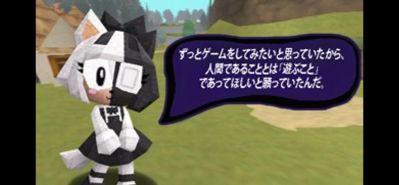
A conversation with ⠀.

A mysterious boss fight.
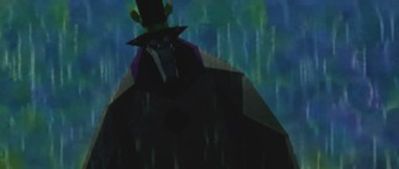
An ominous cutscene of the Turtle King: Cecil Turtle, standing in the dark and stormy night as he views the vile and horrific genocide he just committed.


Trivia
- Cecil Turtle serves as both the first and final boss of the game, being both the first and last character you encounter in-game, although his appearance is extraordinarily distorted at the end of the game, and his motives are much more ominous and clear.... F̶̨̡̖̗̯̯̼͙͕͔̮̤̓͐̆̐͒̎̏̀͝Ẹ̸͈̦̆̋̍T̵̘̼̑̍Ç̸͇̼̲͕̙͍̰̰̥̫̹̤̗̗͂́͌̔̍̔̓̽̄́̉̂̽͝H̷͚̲̱̘̹̽͒͒̀̈͒̃͐̏̒́͝ ̶̨̜̲͓̲̳̜̲̗̱͖̀̄̀̇͌̊͘ͅṂ̸̫̱̮̭̣͈̗͉̱̙̙̩͔͒́ͅȨ̴̢̨̗͓͎̱͓̥̓̈́͑̀̚͝ͅͅ ̵̢̡̮̻̩͓̺̑̊ͅT̷̡̼͚͈̤̲̭̦̹̪͖̔̓͂́͜͝H̷̜̩̤͍̻͓̅͒̚̕Y̶͍̆̆ ̸̢̡̱̳̭̺̂̏̎̏̌̀̈́̓̊̄̓̏S̶͓̻̦̙̯͈̖͙̙̪̆́̀͂͆̂̈́̈́͜͝ͅO̶͈̣̜̩̣͎͑̃Ư̶̝̰͖͎̠͈̟̪̮̺̼͔̥̩̍̅̆̀̀͑̄̐̽͗͜͠L̴̛̛͇̹̥̦̦̜͔̣̞̤̾̊̇̏̄̔͂̇̓̉̈̐̉.̵̧̤͎̗̖̻͇̟͖͉̱͕̐̍̆̍̂͂
- Crack Miser looks suspiciously a lot like Spamton.
- Despite the game's name being Super Jangle 64, it is neither a N64 game nor is it remotely like Super Mario 64 lmao.
- Jangle was so terminally online that he once called everything beyond his PC screen the "outernet". Respectively, the game calls the outside world "the outernet" as well, thus giving Chapter 1 its' name.
- There's a sex scene where Hiei and Shouko have sex but you have to unlock it by beating the hardest bonus stage in the game, after that you can see them doing it as long as you want. Their 3D Polygons are super smexy. There's also a scene where Jangle fucks a cactus because he thought it was a giant penis.